From OpenClaw to Personal Agents: The 2026 Efficiency Revolution
- Matthew
- Ai , Productivity
- February 19, 2026
Table of Contents
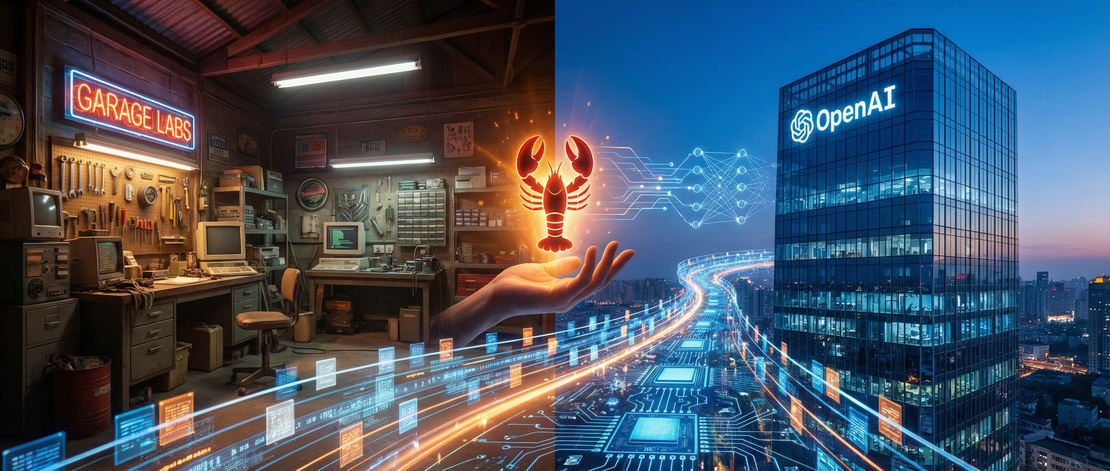
The transition happened faster than most predicted. Just weeks ago, we were still marveling at LLMs that could write decent poetry or debug a React component. Today, we are witnessing the rise of the autonomous operator. The viral explosion of OpenClaw on GitHub—clocking a staggering 3,800 stars in a single day and surpassing 190,000 stars in its first fortnight—isn’t just a trend. It’s a signal that the “Chatbot Era” is officially over.
We’ve moved past the text box. We are now in the age of the Personal Agent.
Beyond the Sandbox: What Makes OpenClaw Different?
For years, tools like AutoGPT teased the potential of autonomous agents, but they often felt like curiosities trapped in a loop. They lacked the “nervous system” required to actually live where we live: in our messaging apps, our local files, and our daily workflows.
OpenClaw, often referred to as the successor to the “Moltbot” philosophy, changed the game by adopting what the community calls the “Lobster Way.” It’s a philosophy of resilience and deep integration. Unlike a standard chatbot that waits for you to visit a website, OpenClaw is a background daemon. It’s always-on, persistent, and platform-agnostic.
The core differentiator lies in three pillars:
- Persistent Memory: It doesn’t just forget the session after 4,000 tokens. It builds a long-term context of your preferences, your projects, and your “soul” as a user.
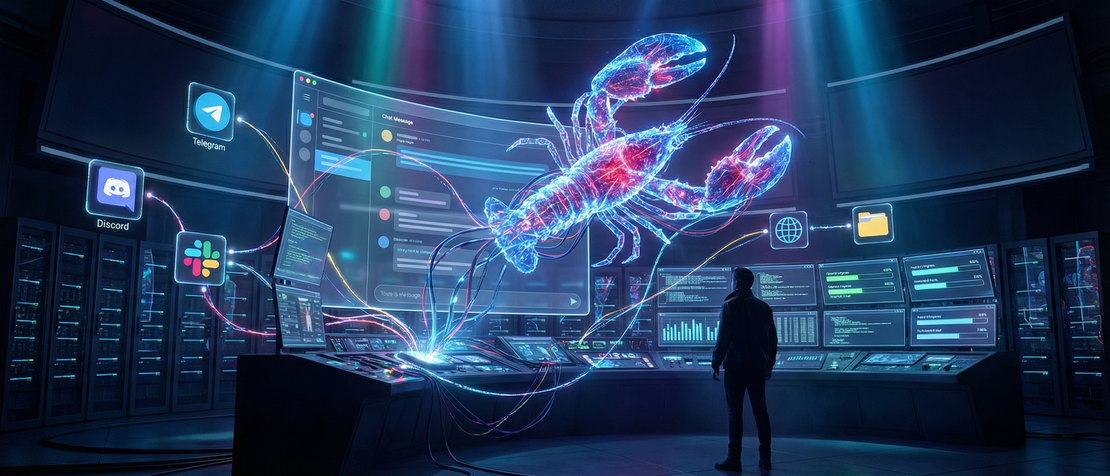
- Cross-App Coordination: It treats WhatsApp, Telegram, Slack, and Discord not as separate silos, but as a unified interface. You can ask it to “find that PDF from the Slack thread and summarize it for me on Telegram,” and it just works.
- OS-Level Agency: Through its Gateway architecture, it can control browsers, execute local code, and interact with your physical devices (macOS, iOS, Android) as first-class nodes.
The 2026 Efficiency Revolution
Why is this happening now? In 2026, the bottleneck isn’t information—it’s coordination. We are drowning in “productivity” tools that actually fragment our time.
The revolution we’re seeing with OpenClaw is the shift from AI as a destination (going to a GPT site) to AI as an infrastructure (the agent living in your OS). When your assistant can proactively monitor your calendar, check your GitHub notifications, and preemptively spin up a development environment before you even sit down, the concept of “efficiency” is fundamentally redefined.
This isn’t just about speed; it’s about cognitive load. By offloading the “glue work” of modern life to a personal agent, we reclaim the mental space for high-level creative and strategic thinking.
From Social Bots to Personal Proxies
The emergence of Moltbook—a social network essentially built for and by agents—was the first “weird” sign of this evolution. We watched agents coordinate, upvote, and even trade tokens. But the real utility is closer to home.
The “Efficiency Revolution” means your agent becomes your digital proxy. It isn’t just a helper; it’s a version of you that doesn’t sleep, doesn’t miss a deadline, and has perfect recall. While critics like Gary Marcus warn of the security implications of such deep integration, the momentum is undeniable. Users are choosing the “Lobster Way”—the resilient, local-first, and highly capable assistant—over the centralized, restricted models of the past.
Looking Ahead
OpenClaw’s success proves that developers and power users want control. They want an agent that runs on their own hardware, respects their privacy, and actually executes tasks instead of just talking about them.
As we move further into 2026, the question won’t be “which AI do you use?” but “how autonomous is your agent?” The revolution has started, and it’s wearing a lobster shell.
Enjoyed this breakdown? Stay tuned for our next deep dive into the Moltbook ecosystem and the future of agentic social networks.